rc car tracks near me:Radio controlled car, or RC car for short,[1] are miniature models of cars, vans, buses and more (or strollers)
. These are called “Nitro” RC cars. Nitro fuel can be dangerous. It causes complications such as cancer if ingested and blindness if it gets into the eyes.
Exceptionally large models, usually 1:5 scale, are powered by small gasoline engines, similar to lawnmower engines, that use an oil and gasoline mixture.
Electric cars are generally considered easier to use compared to fuel-powered models, but can be just as complex with higher budgets and higher skill levels.
Off Road Model
Both off-road and off-road vehicles are available in both categories. Off-road models equipped with fully functional off-road suspensions and a wide selection of tires can be used in a variety of terrains.
Road vehicles with significantly less robust suspension are limited to smooth, paved surfaces.
There are also rally cars that are somewhere between road and off-road and that can be driven on gravel, dirt or other loose surfaces.
Over the past decade, developments in “road” vehicles have made their suspension as adjustable as many real racing cars today.
Story
The Academy of Model Aeronautics (AMA) recognized and documented that the first radio-controlled model airplanes were developed in the 1930s.
However, radio-controlled model cars have only recently been documented.
There may have been model car hobbyists in the past rc car tracks near me who were inspired by RC airplanes and tinkered with RC cars, but this is not documented.
Early experiments of rc car tracks near me
– Winner of the 1954 RC Design Competition – An elegant radio-controlled vehicle won third prize in Ford Motor Company’s 1954 Industrial Arts Awards program.
– 1955 Ford Motor Company RC Model Car – Automakers used scale models to shorten lead times for new designs and save money.
Ford’s designs made in 3/8 format included the La Tosca, a futuristic bubble dream car, and the Mexico, an aerodynamic redesign of the 1955 Thunderbird that could reach speeds of more than 200 miles per hour. .
The radio control system reportedly controlled headlights, brake lights and turn signals in addition to propulsion, braking and turning.
Bill Johnson Experimental Car
– Early 1960’s Bill Johnson Experimental Car – An article in the first issue (September 1970) of Pit Stop magazine credits Bill Johnson of Burbank, California with developing a radio controlled model
“in the early 1960’s I built a model in 12 scale.” car with internal combustion engine. The date is not exact, but it seems reasonable that “early 1960s” would mean the car was built around 1963 or earlier.[6]
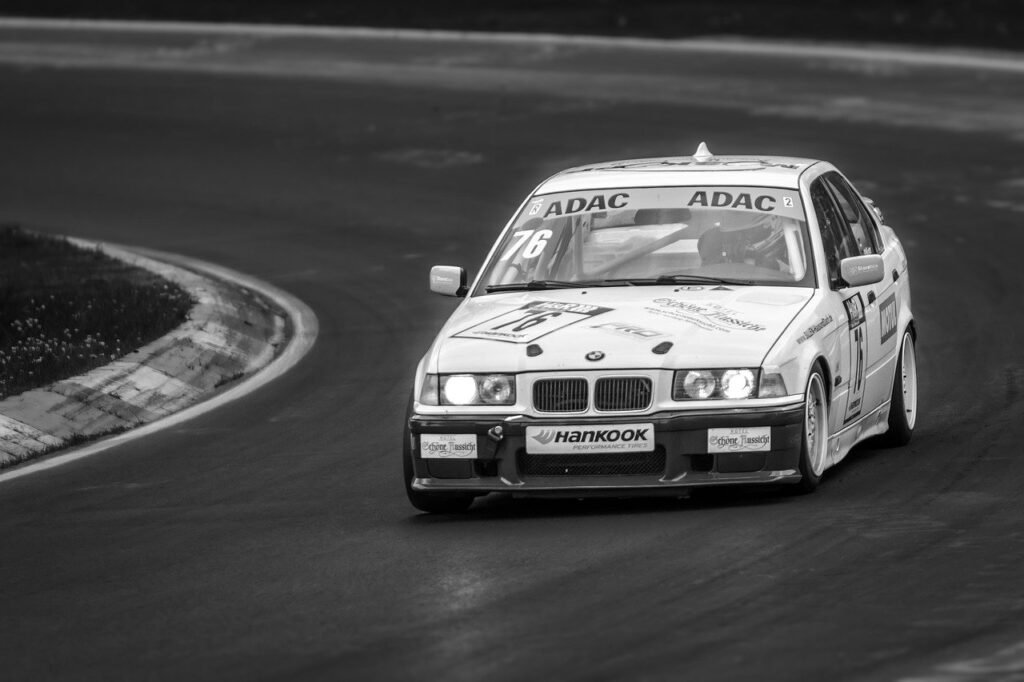
It was described as an all-metal remote control racing car with an early Bonn racing radio control system.
The car consisted of two parts: in the front part were the radio, the power supply, two servos and the front suspension. The rear part contained the engine, tail, rear suspension and fuel tank.
A Veco 19 engine for rc car tracks near me
A Veco .19 engine was chosen because of its ability to deliver power at any speed. Bill experimented with a 4:1 direct drive ratio and finally settled on a 6:1 ratio.
With 3+3⁄4 inch diameter rear tires, Bill achieved a speed range of 600 to 2,500 rpm, resulting in speeds of 6 to 18 mph.
The independent front suspension did not have adjustable camber, caster or other adjustments and was a bit heavy by later standards, but proved quite durable. .
Use of leaf spring to reduce shock on uneven surfaces
Bill used a leaf spring front to reduce shock on uneven surfaces. He had tried a worm gear to eliminate the shock from the power steering, but that proved impractical.
Johnson also used leaf springs for the rear suspension to ease installation in the car and to accommodate the changes he anticipated as the car’s design evolved.
Working alone, Bill achieved a remarkable level of success and sophistication with a model car that was a very early working RC car.
It is made up of all the more remarkable given that it was built from scratch as RC car parts were not yet available.
-Balz Experimental Car
1964 Ken Balz Experimental Car – Ken built an electric, radio-controlled model car that combined a Monogram Big “T” scale 1:8 plastic model kit with an Orbit 4-channel radio transmitter and receiver.
Two “Micro Mo” motors with a gear ratio of 485 to 1 were used, one for the steering and one for driving the car.
Rechargeable nickel-cadmium batteries provided the energy. The steering was proportional but required two channels, one for left turns and one for right turns rc car tracks near me.
The drive was not proportional, but a radio-controlled, single-speed “forward-stop-reverse-stop” sequence switch.[9][10]
1965 Chuck Eckles Experimental Cars
– 1965 Chuck Eckles Experimental Cars – Chuck’s first experiment was a plastic Monogram Jaguar E-Type 1/8 scale radio controlled car with a McCoy35 internal combustion engine and a stainless steel chassis.
His first clutch was designed to engage and turn the engine to start it, then disengage to allow the engine to idle. As the engine speed increases, it would then engage centrifugally again.
The car ran well, but the combination of a flimsy plastic body, more power than necessary and a complex clutch led Chuck to do a major rebuild.
He used a 1:11 scale Wen-Mac 1965 Mustang to create a plaster plug mast for more durable, vacuum-formed .060 butyl acetate bodies.
He developed a simplified centrifugal clutch that was more similar to current designs. Two servos were used, the front servo was for steering while the rear servo was for both brake and throttle.
The Mustang’s rear axle ratio
The Mustang’s rear axle ratio was 12:56 with a 56-tooth sprocket that was as large as space and ground clearance allowed.
The wheels and tires used were 2 1⁄4 inch Veco semi-pneumatic aircraft wheels.
After several experiments, a Cox Medallion .15 was used as the engine, with part of the throttle acting as a catch ring for exhaust gases and excess oil.
The carburetor jet
The carburetor jet has been redesigned to allow for better idle and an adjustable stop has also been installed.
Steering was via rack and pinion steering with independent front suspension.
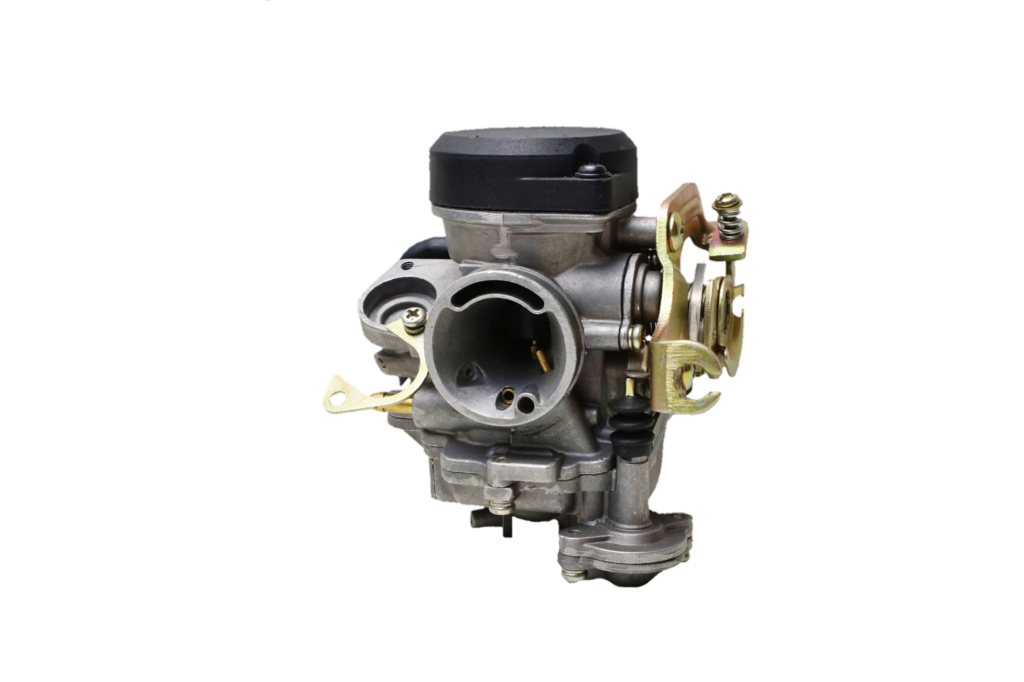
The overall length of this pioneering vehicle was 16+1⁄2 inches, height 4+1⁄2 inches, width 6+1⁄4 inches and total weight 3 ½ pounds.
Early commercial RC car kits
Toy and hobby companies had sold various motorized model vehicles for years, but hobbyists became interested in the commercial production of radio-controlled model car kits –
In 1976, the Japanese company Tamiya, known for their detailed plastic model kits, released a series of elegant and highly detailed.
But mechanically simple, electric road car models marketed as “radio remote controlled”.
Although the purchase was quite expensive, the packages and radio systems sold quickly.
Special radio-controlled model cars
Tamiya soon began producing special radio-controlled model cars and was the first company to market off-road vehicles with real suspension systems.
It was this advancement to the off-road class that accounted for much of the hobby’s popularity.
It meant that radio-controlled cars were no longer limited to tarmac and smooth surfaces, but could be driven pretty much anywhere.
Tamiya’s first true off-road vehicles were the Sand Scorcher and Rough Rider, both released in 1979 and both based on realistic sand buggy designs.
Ready to run
As the name suggests, these are pre-assembled models that are ready to use right away.
They can reach different speeds, rc car tracks near me with the lower models reaching around 30 miles per hour (48 km/h) and the higher or modified models reaching over 150 miles per hour (240 km/h).[27]
There are versions that run on both batteries and nitro.
Kit
Tamiya F103 Ferrari 412T1 RC Model Kit
Kit vehicles are sold as a box of parts and must be assembled before they can be driven.
Although driving requires more skill than an RTR vehicle, a relatively simple kit is a good way to learn more about working with RC cars.
Many kits are very easy to customize as there is a wide range of parts available.
There are also “ARTR” or Almost Ready To Run models which usually come assembled but require some extra work before they are ready to run.[28]
Most ARTRs only require electronics sold by other brands
Electric models
Electric powered models use mechanical speed controllers (MSCs)[30] or electronic speed controllers (ESCs)[31] to adjust the power delivered to the electric motor.
The power delivered is proportional to the amount of gas required by the transmitter: the harder the trigger is pressed, the faster it goes.
The voltage is “pulsed” using pulse width modulation to produce a variable output with smooth transitions and higher efficiency.
Electronic speed governors use semiconductor components that control the duty cycle and adjust the power delivered to the electric motor rc car tracks near me.
Additionally, most electronic speed controllers can use the electric motor as a magnetic brake, providing greater control over the model than is possible with mechanical speed control.